
When Do You Need a SCADA System? Key Signs and Benefits
A SCADA system (Supervisory Control and Data Acquisition) becomes essential when industrial operations grow beyond a single machine or local control panel.
If you are asking whether you really need SCADA, what problems SCADA solves, or what benefits it will bring to your factory, this article explains the clear technical and operational indicators that signal it is time to implement a SCADA system — and the measurable improvements it delivers.
What Is a SCADA System?
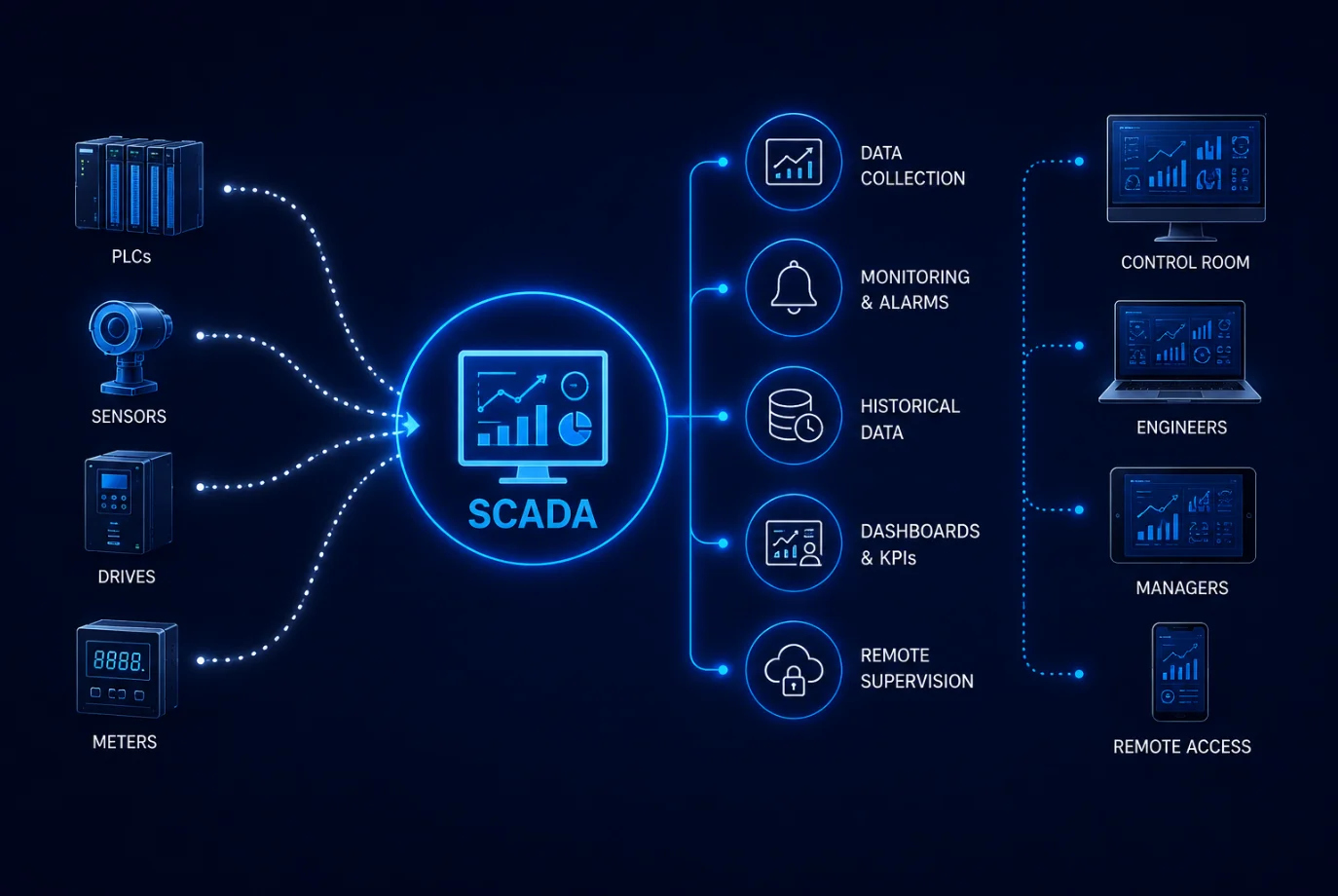
A SCADA system is a supervisory platform that collects data from multiple PLCs and field devices, centralizes monitoring and alarms, stores historical time-series data, provides dashboards and KPIs, and enables remote supervision. Unlike a local HMI, SCADA operates at plant-level or multi-site level.
When Do You Need a SCADA System?
Below are the most common signs that your operation requires SCADA.
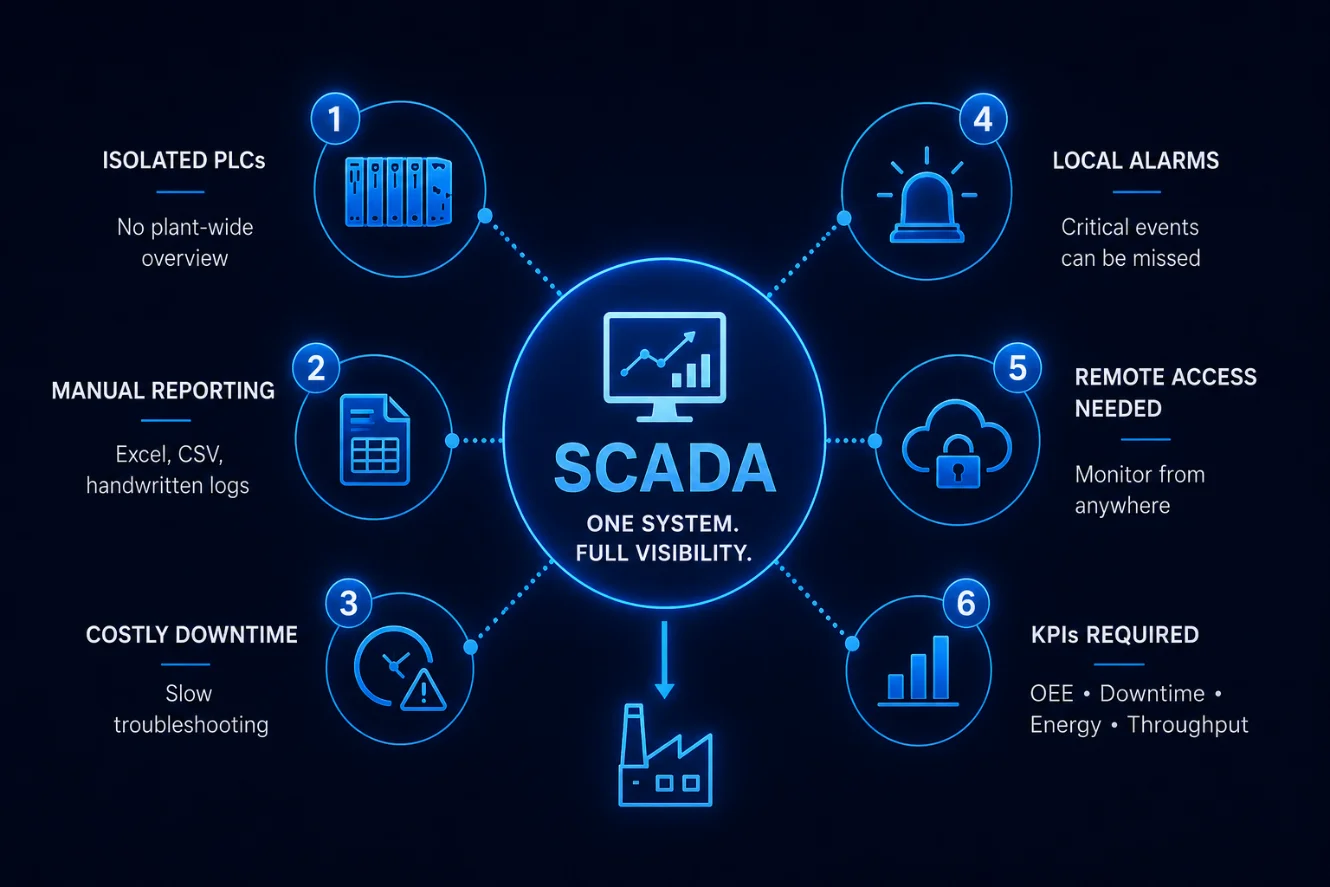
1. Multiple PLCs Operate Independently
If each production line has its own PLC, machines are isolated, and there is no plant-wide overview, you lack centralized supervision. SCADA consolidates all PLC data into one structured system, giving operators and engineers a unified view of the entire operation.
2. Production Data Is Stored in Spreadsheets
If your process includes exporting CSV files, creating manual Excel reports, or keeping handwritten production logs, you are manually compensating for missing data infrastructure. SCADA automates real-time data collection and reporting, reducing manual work and providing more consistent and accessible production data.
3. Downtime Causes Financial Loss
If root cause analysis is slow, alarm history is fragmented, and maintenance is reactive, downtime can quickly become costly. SCADA provides event correlation, alarm history, and trend analysis that reduce troubleshooting time and help maintenance teams identify the causes of production problems more efficiently.
4. No Centralized Alarm Management Exists
Without SCADA, alarms often stay local to individual machines, meaning critical events may be missed and there may be no escalation process. SCADA centralizes alarm prioritization, logging, and notifications, giving operators a structured way to identify and respond to critical events.
5. Remote Monitoring Is Required
Modern industrial systems increasingly require multi-site supervision, remote diagnostics, and secure access for service teams. SCADA provides a structured supervisory layer between PLC control and remote users, making it possible to monitor and diagnose operations without being physically present on the production floor.
6. Management Demands KPIs and Transparency
Management often requires visibility into OEE, throughput, downtime classification, and energy efficiency. SCADA transforms machine-level signals into business-level metrics, helping management understand what is happening in production and make decisions based on actual operational data.
What Benefits Does a SCADA System Bring?
Implementing SCADA delivers measurable improvements across production, maintenance, management, and long-term system development.
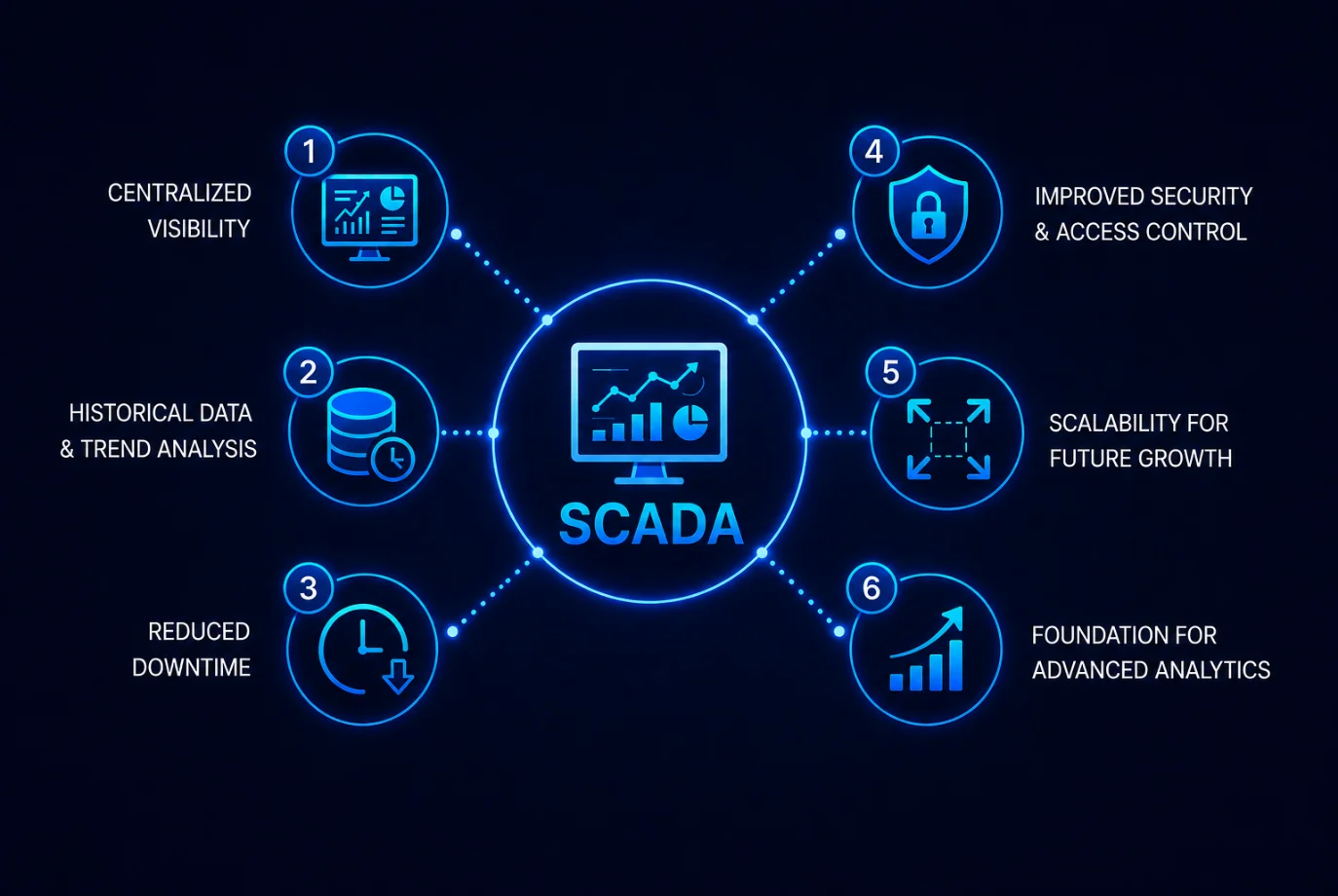
1. Centralized Visibility
Operators and engineers gain a unified overview of all production lines, equipment status, and alarm states. This improves coordination and response time by making relevant operational information available through one centralized system.
2. Historical Data and Trend Analysis
SCADA continuously stores time-series data, enabling performance analysis, root cause investigation, and the development of predictive maintenance strategies. Without historical data, optimization is largely guesswork. With structured historical information, teams can identify patterns, compare performance over time, and make better-informed decisions.
3. Reduced Downtime
By correlating alarms, trends, and events, SCADA accelerates fault diagnosis and helps reduce production losses. Instead of investigating isolated machine events without historical context, maintenance and engineering teams can use centralized information to understand what happened and why.
4. Improved Security and Access Control
Modern SCADA architectures include role-based permissions, audit trails, network segmentation, and secure communication protocols. These capabilities become increasingly important as IT and OT systems converge and industrial environments become more connected.
5. Scalability for Future Growth
SCADA systems allow companies to add new PLCs, expand to new sites, integrate new equipment, and scale data storage as operations grow. This makes SCADA a long-term foundation for industrial development rather than a solution limited to the current size of the production environment.
6. Foundation for Advanced Analytics
SCADA provides the structured data layer required for predictive maintenance, energy optimization, AI-based anomaly detection, and fleet coordination. Without structured data acquisition, advanced intelligence is not possible because analytics and AI depend on reliable and well-organized operational data.
When You Might Not Need SCADA (Yet)
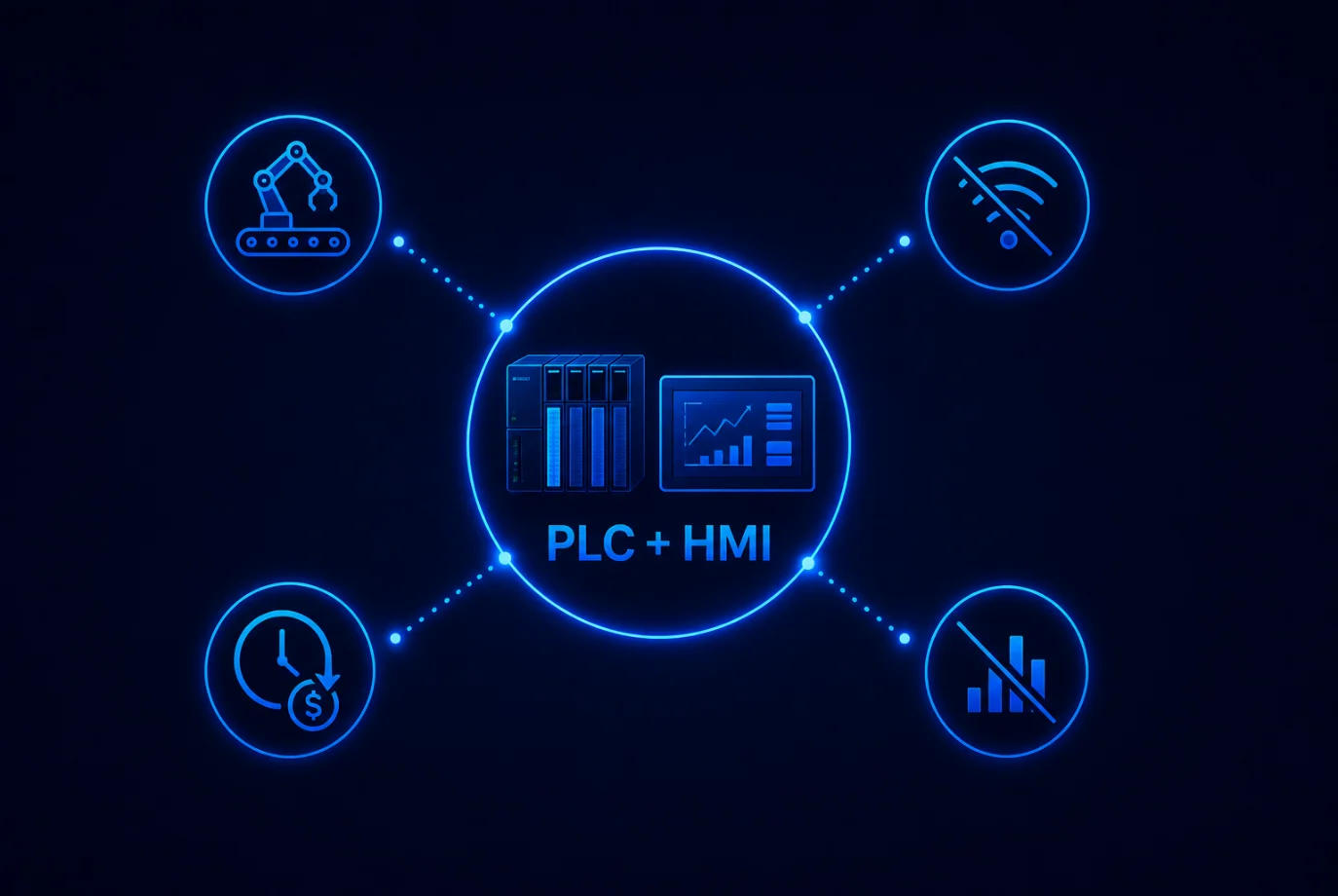
You may not need SCADA if you operate a single standalone machine, do not require remote monitoring, have minimal downtime costs, and do not need historical analysis. In small, isolated systems, PLC + HMI may be sufficient.
Conclusion
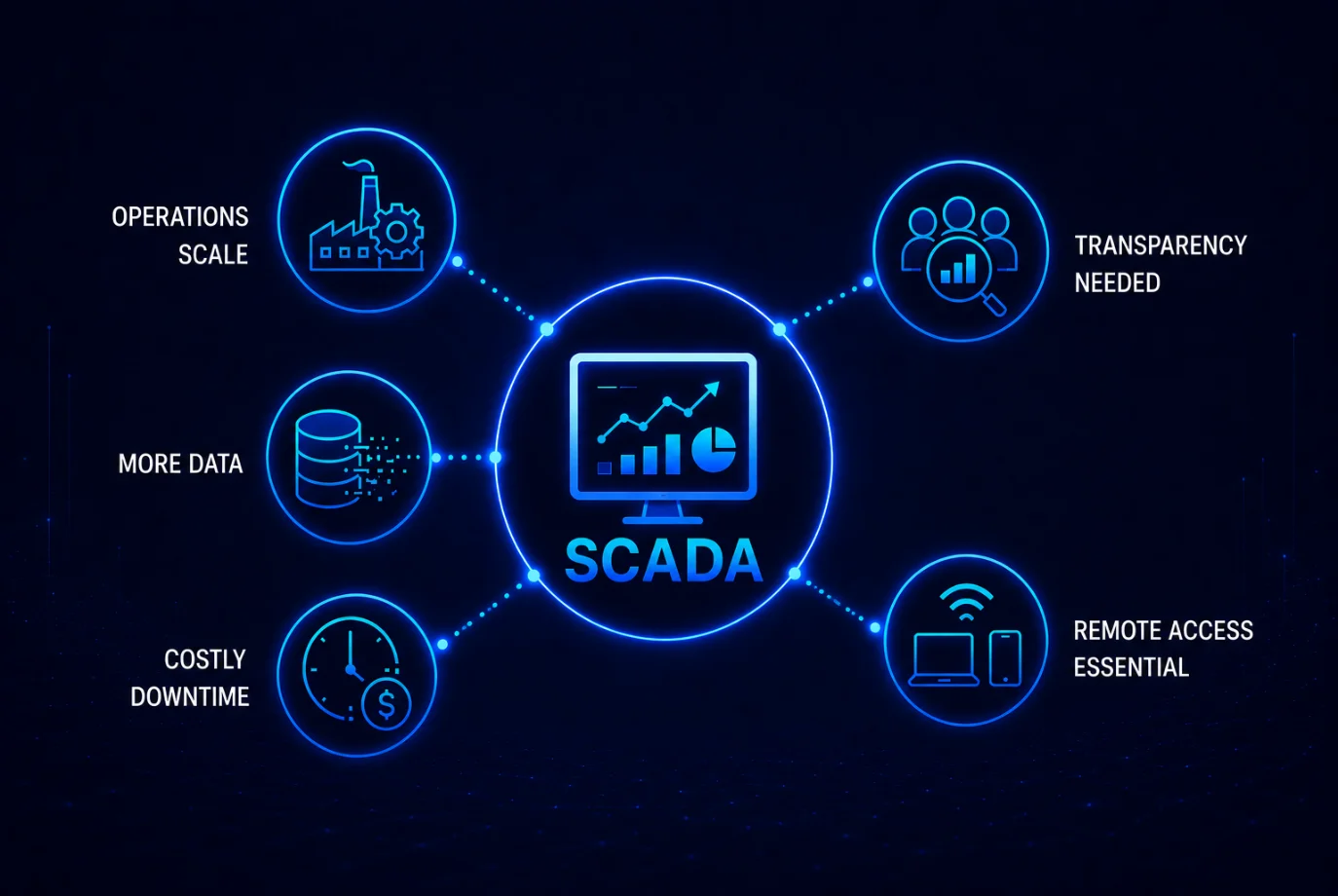
You need a SCADA system when operations scale, data volume increases, downtime becomes costly, management requires transparency, and remote access becomes essential.
SCADA transforms machine-level data into structured operational intelligence, enabling informed decisions, improved reliability, and long-term scalability.

Frequently Asked Questions
What is the main purpose of a SCADA system? The main purpose of a SCADA system is to collect, monitor, store, and visualize data from multiple industrial devices while enabling centralized supervision and control.
How do I know if my factory needs SCADA? You likely need SCADA if you operate multiple PLCs, rely on manual reporting, experience costly downtime, or require centralized alarms and remote monitoring.
What is the difference between SCADA and HMI? An HMI is a local operator interface connected to a PLC. A SCADA system is a plant-level supervisory platform that collects and manages data from multiple devices.
Does SCADA reduce downtime? Yes. By providing centralized alarm management, historical data, and event correlation, SCADA significantly improves fault diagnosis and reduces downtime.